 You must bear your karma cheerfully, whatever it may be, taking it as an honour that suffering comes to you, because it shows that the Lords of Karma think you worth helping. However hard it is, be thankful that it is no worse. Remember that you are of but little use to the Master until your evil karma is worked out, and you are free. By offering yourself to Him, you have asked that your karma may be hurried, and so now in one or two lives you work through what otherwise might have been spread over a hundred. But in order to make the best out of it, you must bear it cheerfully, gladly.
Yet another point. You must give up all feeling of possession. Karma may take from you the things which you like best- even the people whom you love most. Even then you must be cheerful- ready to part with anything and everything. Often the Master needs to pour out His strength upon others through His servant; He cannot do that if the servant yields to depression. So cheerfulness must be the rule.
Excerpt from the book : At the feet of the master by J. Krishnamurti
-----------------------------------------------------
Friday, October 14, 2005
Cheerfulness

Thursday, October 13, 2005
Mind Without Fear
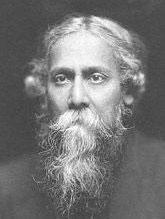
 Picture : Rabindranath Tagore
Where the mind is without fear and the head is held high;
Where knowledge is free;
Where the world has not been broken up
into fragments by narrow domestic walls;
Where words come out from the depth of truth;
Where tireless striving stretches its arms towards perfection;
Where the clear stream of reason
has not lost its way into the dreary desert sand of dead habit;
Where the mind is led forward by thee into ever-widening thought and action---
Into that heaven of freedom, my Father, let my country awake.
GITANJALI
"Song Offerings"
Translations made by the author from the original Bengali.
Selected, Titled and Edited by Ralph Losey.
------------------------------------------
Existence of Time
 Picture : George Gurdieff
" 'Time in itself does not exist, there is only the totality of the results issuing from all the cosmic phenomena present in a given place. ' "Time in itself no being can understand by Reason or perceive by any outer or inner being-function It cannot even be sensed by any gradation of the instinct present in every more or less independent cosmic concentration. "It is possible to evaluate Time only by comparing different cosmic phenomena occurring under the same conditions and in the same place where Time is being considered. "It should be noted that in the Great Universe all phenomena, without exception, wherever they arise and are manifest, are simply successive, lawful 'fractions' of some whole phenomenon which has its prime arising on the Most Holy Sun Absolute. "In consequence, all cosmic phenomena, wherever they proceed, have an 'objective' significance. "And these successive, lawful fractions are actualized in every respect, even in the sense of their involution and evolution, according to the fundamental cosmic law, the sacred Heptaparaparshinokh. "Time alone has no objective significance, since it is not the result of the fractioning of any definite cosmic phenomenon Issuing from nothing, but always blending with everything while remaining self-sufficiently independent, Time alone in the whole of the Universe can be named and extolled as the 'Ideally Unique Subjective Phenomenon. ' "Thus, my boy, Time or, as it is sometimes called, the 'Heropass,' is unique in having no source on which its origin depends, and it alone, like "divine Love," always flows independently and blends proportionately with all the phenomena present in all the arisings in any given place in our Great Universe.
All and Everything, Beelzebub's Tales to His Grandson, First Book, Ch. 16, G. Gurdieff
-----------------------------------------------------
"Commentaries on Living" By J Krishnamurti
 Picture : J. Krishnamurti
Website: http://www.jkrishnamurti.org/
The hills across the lake were beautiful, and beyond them rose the snow-covered mountains. It had been raining all day; but now an expected miracle, the skies had suddenly cleared, and everything became alive, joyous and serene.
The flowers were intense in their yellow, red and deep purple and the raindrops on them were like precious jewels. It was most lovely evening, full of light of spelndour. The people came out into the streets, and along the lake, children were shouting with laughter. Through the all movements and beauty there was enchanting beauty and a strange all-pervading peace.There were several of us on the long bench facing the lake. A man was talking in rather a high voice, it was impossible not to overhear what he was saying to his neighbor. ?On the evening like this I wish I were far away from this noise and confusion , but my job keeps me here, and loathe it.? People were feeding the swans, the ducks and few stray sea-gulls. The swans were pure white and very graceful. There wasn?t a ripple on water now, and the hills across the lake were almost black; but the mountains beyond the hills were aglow with setting sun, and the vivid clouds behind them seemed passionately alive.
Excerpt from the book : "Commentaries on Living" By J Krishnamurti
-----------------------------------------------------
Dolano: The 21st Century Zen Master
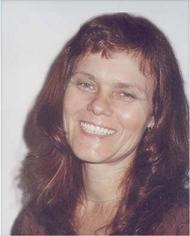
"Dolano was born in 1952, in Lindau, Bodensee Germany and grew up in institutions. From childhood on throughout her life she was in search for truth. After a long wandering and getting lost in so-called wrong directions, dolano finally found Osho, her beloved Master in1979. Osho saved her from drowning and introduced her to meditation."
The meeting with Truth is Satsang.
"Truth itself is Satsang"
With an empty mind and open heart,
out of not knowing you know.
You are Truth itself, it is your very, very nature.
What is called Truth is That which is always and does not change.
It is That which is before, during and after experiences;
That which remains the same.
It is That which does not come and go.
You are Truth itself.
Source is Truth, pure intelligence and clarity.
Its nature is emptiness and openness.
Truth is the light, the power, which removes lies and confusion.
When you bring light into a dark room, darkness disappears naturally,
without ever needing to touch or analyze darkness.
You are the light.
When Osho says, "be a light unto yourself",
he points to "who you are".
You are the light; who else will ever recognize if not YOU, Truth itself?
Truth recognizes Truth-itself by itself.
It is That, which cannot be seen or experienced, because it is YOU.
You can't see your own eyes, because they are too close to you.
But "who you are" is not even close to you, it is YOU.
No beginning no end --- is always and has been always. You have only overlooked.
OM-shanti
Tantra Master


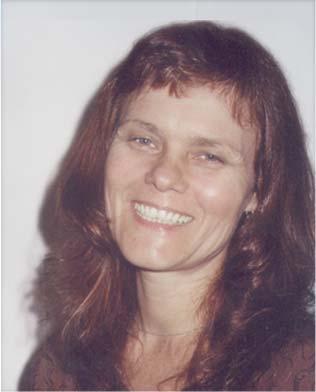
Here is the website by ma krishna Radha : http://www.tantralife.com/english/default.htm , a long time osho sannyasin.
I read her book on tantra and i can say that the essence of her book is described in the following quote on the front page of her website:
"Generally what we call love,
it's not true love.
We ask, we demand.
Ordinary love is a kind of begging:
"Give me more, give me more!".
True love says: " ask me more, take more".
When love is giving, it is true.
When it longs to have, it is false.
And when love is giving,
it spreads, it pulsate."
Osho
How I Became a Madman
 You ask me how I became a madman. It happened thus: One day, long
before many gods were born, I woke from a deep sleep and found all my
masks were stolen -- the seven masks I have fashioned and worn in seven
lives -- I ran maskless through the crowded streets shouting, "Thieves, thieves, the cursed thieves."
Men and women laughed at me and some ran to their houses in fear of me.
And when I reached the market place, a youth standing on a house-top cried, "He is a madman." I looked up to behold him; the sun kissed my own naked face for the first time. For the first time the sun kissed my own naked face and my soul was inflamed with love for the sun, and I wanted my masks no more. And as if in a trance I cried, "Blessed, blessed are the thieves who stole my masks."
Thus I became a madman.
And I have found both freedom and safety in my madness; the freedom of loneliness and the safety from being understood, for those who understand us enslave something in us.
But let me not be too proud of my safety. Even a Thief in a jail is safe from another thief.
The Madman : His Parables and Poems (1918) , Khalil Gibran
Success

So Called Success:
"In seeming contrast to the descending or unsuccessful type, but in reality in exactly the same position, are people who are successful from the ordinary point of view, but successful through adaptation to the darkest or most senseless sides of life: people who quickly amass enormous fortunes, millionaires and super-millionaires; successful statesmen of opportunist or definitely criminal activities; " scientists " who create bogus theories, which become fashionable and arrest the development of true knowledge; " philanthropists " who support all forms of prohibitive legislation; inventors of high explosives and poisonous gases; sport-addicts of every kind and description; prizefighters, world champions, record breakers, cinema-clowns and " stars "; novelists, poets, musicians, painters, actors, commercially successful, but having no other value; founders of crazy sects and cults, and the like. In each new life these people continue to do what they did before, spend less and less time on preparatory training, grasp sooner and sooner the technique of their business and the technique of success, attain greater and greater celebrity or fame. Some of them become " infant prodigies " and show their special capacities from the earliest years.
The danger for the successful type of people is their success. Success hypnotises them, makes them believe that they themselves are the cause of their success. Success makes them follow the line of least resistance, that is, sacrifice everything to success. Therefore nothing changes in their lives, save that success is attained ever more easily and ever more mechanically. Without formulating it they feel that their strength lies precisely in this mechanicalness, and they suppress in themselves all other desires, interests and inclinations. "
True Success:
"Men of real science, of real art, of real thought or action, differ from these chiefly in very seldom attaining success. As a rule, they begin to be recognised only long after the end of their earthly life. And this is an exceedingly favourable factor from the point of view of the repetition of their lives. The inner decomposition which almost inevitably comes with success never sets in with them. And they start each new life striving towards their unattainable aim, every time with new strength, and they sometimes begin and " remember" astoundingly early, like some famous musicians or thinkers.
Evolution, that is, inner growth, inner development, cannot be either accidental or mechanical. The ways of evolution are the ways of Jnana-Yoga, Raja-Yoga, Karma-Yoga, Hatha-Yoga and Bhakti-Yoga, or the way of the special doctrine accessible only to few, which was mentioned earlier, in the chapter on Yoga. The five Yogas and the way of the special doctrine are the ways of work on oneself for people of different inner type. But all the ways are equally difficult, all the ways equally demand the whole of man. "
A New Model of the Universe, P. D. Ouspensky
--------------------------------------------------------------------
Identification : An Obstacle to Self-remembering
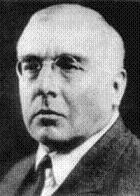 Picture : P. D. Ouspensky
Identifying is the chief obstacle to self-remembering. A man who identifies with anything is unable to remember himself. In order to remember oneself it is necessary first of all not to identify. But in order to learn not to identify man must first of all not be identified with himself, must not call himself 'I' always and on all occasions. He must remember that there are two in him, that there is himself, that is 'I' in him, and there is another with whom he must struggle and whom he must conquer if he wishes at any time to attain anything. So long as a man identifies or can be identified, he is the slave of everything that can happen to him. Freedom is first of all freedom from identification.
"After general forms of identification attention must be given to a particular form of identifying, namely identifying with people, which takes the form of 'considering' them.
"There are several different kinds of 'considering.'
"On the most prevalent occasions a man is identified with what others think about him, how they treat him, what attitude they show towards him. He always thinks that people do not value him enough, are not sufficiently polite and courteous. All this torments him, makes him think and suspect and lose an immense amount of energy on guesswork, on suppositions, develops in him a distrustful and hostile attitude towards people. How somebody looked at him, what somebody thought of him, what somebody said of him?all this acquires for him an immense significance.
"And he 'considers' not only separate persons but society and historically constituted conditions. Everything that displeases such a man seems to him to be unjust, illegal, wrong, and illogical. And the point of departure for his judgment is always that these things can and should be changed. 'Injustice' is one of the words in which very often considering hides itself. When a man has convinced himself that he is indignant with some injustice, then for him to stop considering would mean 'reconciling himself to injustice.'
"There are people who are able to consider not only injustice or the failure of others to value them enough but who are able to consider for example the weather. This seems ridiculous but it is a fact. People are able to consider climate, heat, cold, snow, rain; they can be irritated by the weather, be indignant and angry with it. A man can take everything in such a personal way as though everything in the world had been specially arranged in order to give him pleasure or on the contrary to cause him inconvenience or unpleasantness.
Excerpt from the book : IN Search of the Miraculous, P. D. Ouspensky
------------------------------------------------------------------------
Cosmic Consciousness

In contact with the flux of cosmic consciousness all religions known and named today will be melted down. The human soul will be revolutionized. Religion will absolutely dominate the race. It will not depend on tradition. It will not be believed and disbelieved. It will not be a part of life, belonging to certain hours, times, occasions. It will not be in sacred books nor in the mouths of priests. It will not dwell in churches and meetings and forms and days. Its life will not be in prayers, hymns and discourses. It will not depend on special revelations, on the words of gods who come down to teach, nor on any bible or bibles. It will have no mission to save men from their sins or to secure them entrance to heaven. It will not teach a future immortality nor future glories, for immortality and all glory will exist in the here and now. The evidence of immortality will live in every heart as sight in every eye. Doubt of God and of eternal life will be as impossible as is now doubt of existence; the evidence of each will be the same. Religion will govern every minute of every day of all life. Churches, priests, forms, creeds, prayers, all agents, all intermediaries between the individual man and God will be permanently replaced by direct and unmistakable intercourse. Sin will no longer exist nor will salvation be desired. Men will not worry about death or a future, about the Kingdom of heaven, about what may come with and after the cessation of the life of the present body. Each soul will feel and know itself to be immortal, will feel and know that the entire universe with all its good and with all its beauty is for it and belongs to it for ever. The world peopled with men, possessing cosmic consciousness will be as far removed from the world of today as this is from the world as it was before the advent of self-consciousness.
Excerpt from the book : Tertium Organum, P. D. Ouspensky
--------------------------------------------------------------
The Buddha
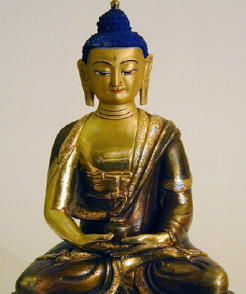 The Buddha went on his way, modestly and deep in his thoughts, his calm face was neither happy nor sad, it seemed to smile quietly and inwardly. With a hidden smile, quiet, calm, somewhat resembling a healthy child, the Buddha walked, wore the robe and placed his feet just as all of his monks did, according to a precise rule. But his face and his walk, his quietly lowered glance, his quietly dangling hand and even every finger of his quietly dangling hand expressed peace, expressed perfection, did not search, did not imitate, breathed softly in an unwhithering calm, in an unwhithering light, an untouchable peace.
Excerpt from the book : Siddhartha, Hermann Hesse
------------------------------------------------------
Wednesday, October 12, 2005
Take it Easy
Don't make the search for truth a serious phenomenon.Take it easy and remember: Easy is right. If strong winds take you hither and thither, don't resist. They appear strong because of your resistence. Relax, go with them. Go with them with totality.
Osho: The Golden Future, Chapter 19
Tuesday, October 11, 2005
A Tribute
Came across Priya Florence Shah's blog and i didn't know that she was single not by choice but because her husband passed away. A nice song is also there. Made me cry.
Visit: http://marketingslave.com/2005/06/06/a-tribute-to-my-love/
The days of the mahatmas and gurus is gone.
I have found these Interesting Osho quotes from sw. milarepa's website:
“I want you to live moment to moment according to your awareness. I will give you methods to be aware but not a discipline, not ready-made answers. I will give you a mirror which reflects, wherever you are, whatsoever the situation is, so that you can act on your own. You need not wait for my guidance. I am not a guru. I am nobody’s leader. I hate the very word ‘leader’. I am not giving you any guidance, telling you where to go. I am not at all interested to give you a certain character, discipline. On the contrary, I am destroying your desire to be a follower and your desire to have a fixed pattern so that unconsciously you can repeat it. Once you are on your own, listening to your own heart, following your own silence, that’s enough. Then you have risen above the so-called humanity.”
The Old Pond - Plop, Chapter 11
“The days of the mahatmas and gurus is gone. They are not needed anymore. A great mankind is essential. The need of the hour is for a great humanity.”
From Sex to Superconsciousness, Chapter 5
“You have to be very careful and cautious because there has never been such a tremendous desire for transformation. Hence, there are bound to be many people who will not miss this opportunity to exploit you.”
I Am That, Chapter 3
"Trust life, love life ... Rejoice life and existence will take care of you."
Om Shantih Shantih Shantih, Chapter 14
Monday, October 10, 2005
laagi tum se man ki lagan
 Picture : John Abraham and Udita Goswami in the movie ' Paap '
I can listen to this song day and night. It's such a wonderful song. Touched me deeply. It takes me into deep meditative state. Enjoy!
O laagi tum se man ki lagan
Lagan laagi tum se man ki lagan
Gali-gali ghoome dil tujhe dhoondhe
Tere bin tarase nayan
Lagan laagi tum se man ki lagan
Aa ja o meri jaan
Mere dil ka jahaan
Maange teri khabar
Dhoondhe tera nishaan
Laagi tum se man ki lagan
Lagan laagi tum se man ki lagan
Tera tujhako saunp de
kya laagat hai mor
Mera mujha mein kuchh naaheen
jo hovat so tor
Tere bin mera man
Jaise ban mein hiran
Jaise pagali pawan
Laagi tum se man ki lagan
Lagan laagi tum se man ki lagan
Amzad Islam Amzad
To listen the song click the link
http://www.musicindiaonline.com/l/17/s/movie_name.1508/
For downloading the song:
http://www.bollyfm.net/temp/mp3/m-p/paap.php
Movie –Paap
Singer – Rahat Fateh Ali Khan
Music –Shahi
Anne Frank's Writings

http://www.ushmm.org/museum/exhibit/online/af/htmlsite/story.html
Go to the above mentioned link and click ' An Unfinished Story ' on top to enter the museum of Anne Frank:
"Born on June 12, 1929, Anne Frank was a German-Jewish teenager who was forced to go into hiding during the Holocaust. She and her family, along with four others, spent 25 months during World War II in an annex of rooms above her father’s office in Amsterdam, the Netherlands. After being betrayed to the Nazis, Anne, her family, and the others living with them were arrested and deported to Nazi concentration camps. In March of 1945, nine months after she was arrested, Anne Frank died of typhus at Bergen-Belsen. She was fifteen years old.Her diary, saved during the war by one of the family’s helpers, Miep Gies, was first published in 1947. Today, her diary has been translated into 67 languages and is one of the most widely read books in the world."
Nicholas Roerich, A Russian painter
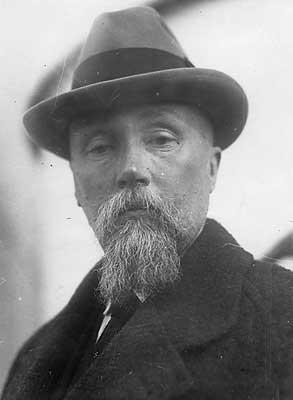
Nicholas Roerich, A Russian painter
http://www.roerich.org/
"The pursuit of refinement and beauty was sacred for Roerich. He believed that although earthly temples and artifacts may perish, the thought that brings them into existence does not die but is part of an eternal stream of consciousness. Finally, he believed that peace on Earth was a prerequisite to planetary survival and the continuing process of spiritual evolution. "
I visited Roerich's art gallery in manali on september last year. I was thinking that osho must have said something about him & found this.
Osho mentions Roerich in two of his talks:
One very great painter not much known in the West, although he was a Western man -- he lived in the Himalayas. He was a Russian, Nicholas Roerich, and he belonged to the czar's family. So while the revolution was happening and nineteen members of the czar's family were slaughtered, even a six-month-old child -- sometimes these revolutions can be so ugly -- Nicholas Roerich escaped; he was just a boy at that time.He lived in the Himalayas. He was a painter, but not a painter for art galleries and marketplaces. He never sold any of his paintings -- not because people were not ready to purchase, but because he was not willing to sell. He said, "It is not a commodity, it is me spread on the canvas. How can I sell it?" He died with all his paintings in his house.I have been to his house -- he was very old at that time -- and seeing that he was vegetarian, I asked, "You are a Russian, why should you be vegetarian?"He said, "Because of my paintings. I cannot even destroy a painting, which is not alive. How can I destroy a living being for my food? And if I can destroy a lion or a tiger, then why not destroy a man?"Because human meat will be more digestible, more in tune with you, what is wrong with the cannibal? Why is everybody against the cannibals? Just because they are eating human beings? But cannibals say human meat is very delicious. They say there is nothing so delicious on the earth as human meat, particularly the meat of small children. If deliciousness and taste are decisive.... And perhaps they may be right, because they have eaten other foods also, and if they are saying it -- and all cannibals agree.... But you can't think of eating a man. How can you think of eating a tiger? How can you think of eating a deer? Just if there is no mind given to you by the past, or if you can put it aside and see directly, you will be simply amazed at what people have been doing.Vegetarianism should not be anything moral or religious. It is a question of aesthetics: one's sensitivity, one's respect, one's reverence for life.To me this is the law of karma. All other interpretations of it are absolutely wrong, just boo boo.
From Personality to Individuality
-------------------------------------------------------------
You are here in Manali, in the Himalayas, surrounded by beautiful hills and majestic mountains. But you can see only that much beauty in these mountains as your eyes, your perception, your perspective are capable of. Nicholas Roerich, the renowned painter, happened to live here for a long time. If you go and see his paintings, they will give you quite a different perspective of the same mountains; you will see them with the eyes of Roerich. He came to these mountains from distant Russia at a time when there were no roads as there are today to connect the Himalayas with the rest of the world. And once he saw the Himalayas he made them his lifelong home; he never left again. These very mountains before you now had possessed Roerich, enchanted him.You have been in the Himalayas for some time, and I don't think you look at these mountains any more. You might have seen them for a little while the first day you arrived and you were finished with them. They are now nothing more than mountains.But Nicholas Roerich spent his lifetime watching and painting the same Himalayas. The eternal and inexhaustible beauty of these mountains continued to enchant him till his last day; he never felt sated. He dedicated his life to painting them, yet his thirst and passion and love for them remained undiminished. He looked at them from hundreds of angles -- during the day and night; morning, noon and evening; summer and winter; spring, rains and autumn; sun and moon and stars -- and in all their myriad colors and moods. He was busy painting them even at the time of his death. So these mountains will look very different if you see them through the eyes of Roerich. They will tell you a different story if you get acquainted with the works of this man.I don't say that you should see these mountains the way Roerich saw them. No, I don't say that. And it is impossible for you to see them as this great painter has. But for sure, after knowing him and his works your perspective will change and deepen, you will know these mountains better.
Krishna: The man & his philosophy
--------------------------------------------------------
Friday, October 07, 2005
Badalaa na apane aap ko
Artist: Jagjit Singh
Album: In Sight
badalaa na apane aap ko jo the vahii rahe
milate rahe sabhii se magar ajanabii rahe
duniyaa na jiit paao to haaro na Khud ko tum
ThoDii bahut to zahan men naaraazagii rahe
apanii tarah sabhii ko kisii kii talaash thii
ham jisake bhii qariib rahe duur hii rahe
guzaro jo baaG se to duaa maaNgate chalo
jisamen khile hain phuul vo Daalii harii rahe
Listen to this Ghazal here: http://www.musicindiaonline.com/l/9/s/album.636/
Ab Khushi hai Na Koi Gam Rulaane waala
I don't know why i'm only posting the lyrics of the gazals, songs etc. only but the following gazal sung by jagjit singh describes my present state of being beautifully.
Artist: Jagjit Singh
Album: Hope
ab khushi hai na koi Gam rulaaNe-waaLa
humNe apna liya har ranG zamaane-waaLa
usko ruKhsat to kiYa tha mujhe maloom na tha
saara Ghar le gaya, ghar chod ke jaane-waaLa
ik musaFiR ke safaR jaisi hai sabki duniyaN
koi jalDi meiN koi de'r se jaane-waaLa
ek be-chehRa see ummid hai chehra-chehra
jis taraF dekhiYe aane ko hai aane-waaLa
Monday, October 03, 2005
Mera Kuch Samaan
 Picture : Gulzar
Wonderful and very touching Song from the bollywood movie ' Ijazat ', lyrics/Direction by Gulzar Enjoy:
Mera Kuch Samaan tumhare paas parha hai
Sawun ke kucch bheeghey bheeghey din rakhey hain
Aur mere ik khut main lipti raat parhi hai
Wo raat bhujha doh mera woh samaan lauta doh
....Ek akeli chuthri mai jub aadhey aadhey bheegh rahey thay
Adhey sukhey adhey geeley.. sukha toh mai ley aai thi
Geela mann shayad bistur ke paas parha ho
Woh bhijhwa doh..Mera woh samaan lauta doh
Ek soh saula chaand ki raatein, ek tumhare kaandhey ka til
Geeli mehndi ki khushboo, jhoot moot ke shikway kuch
Jhoot moot ke waadey bhi subh yaad karwa doon
Subh bhijwa doh..Mera woh samaan lauta doh
Ek ijazat dey doh buss..
Jubh isko dafnaoun gi..
Main bhi waheen soh jaon gi..
Main bhi waheen soh jaon gi...
(Song from Bollywood Movie "Ijazat")
Listen to this song here: http://www.musicindiaonline.com/l/17/s/movie_name.959/